What is the Wisconsin Uniform Dwelling Code?
The Uniform Dwelling Code (UDC) is the Wisconsin Department of Safety and Professional Services (DSPS) program identified as SPS 320 to 325. It governs one- and two-family dwelling units, including manufactured homes.[6] If you want the full text, the DSPS UDC page and the Wisconsin Legislature's administrative code site carry the in-force rules, and both are free to read.
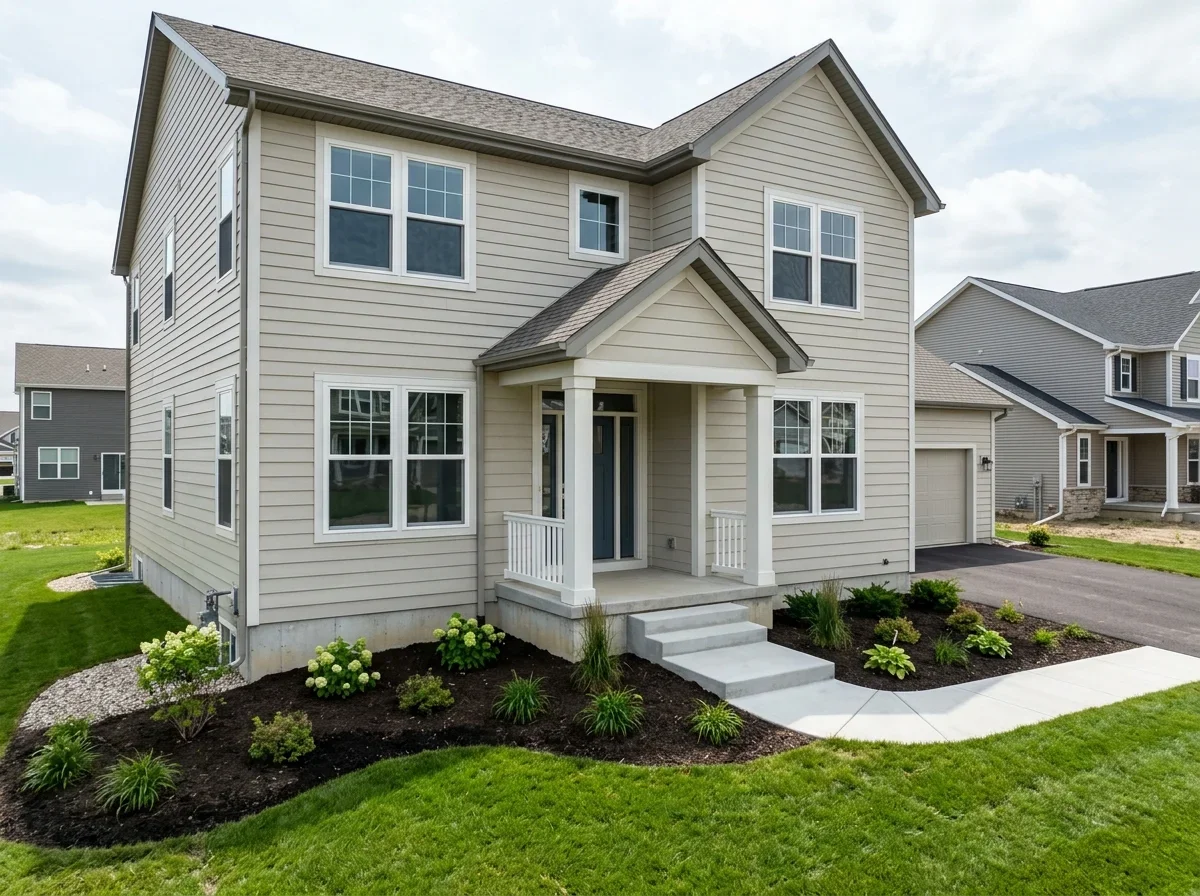
For a house or a duplex, the UDC is the code that applies.
A new one- or two-family dwelling needs a UDC permit.[6]
Check the DSPS page for the current edition before you plan anything, because the code changes over time.
Which dwellings fall under the UDC
The UDC covers one- and two-family dwellings, including manufactured homes.[6] That is the line to settle first.
A project can fall under different rules depending on whether it is a dwelling, an accessory structure or a commercial or multifamily building. Ask your local inspector whether the code applies to your dwelling type.
| UDC applies | Check with the city or inspector |
|---|---|
| New one-family dwellings | Commercial buildings |
| New two-family dwellings | Multifamily buildings |
| Manufactured homes | Accessory structures such as sheds |
Ask the building inspector which rules apply to anything in the right-hand column. The inspector also handles questions about zoning, shoreland and floodplain limits, which are separate from the UDC.
Enforcement split between DSPS and delegated municipalities
DSPS administers the program, but permits and inspections generally run through the municipality when it has delegated UDC authority.[6] Where that is the case, the permit application and the inspections both go through the local office.[9]
In practice the chain looks like this:
- DSPS administers the program.
- The municipality with delegated authority issues the permit and conducts inspections.
- You deal with the local inspector on plans, scheduling and documentation.
Required inspections for new dwellings include footings, foundation, rough construction, insulation and a final inspection.[9]
Step by step
Required inspections for new dwellings
Footings
Inspected before the foundation goes on.
Foundation
Checked after the foundation is built.
Rough construction
Inspected while the framing is exposed.
Insulation
Checked before it is covered.
Final
The last inspection of the finished dwelling.
Ask your inspector how each one is scheduled before you break ground.
Permit fees and application steps differ from one city to the next. The building permits by city table links to local pages, and city guides such as Madison and Green Bay cover the local details.
The city or the building inspector has the final word on what your project needs.
Most-encountered UDC rules for homeowners
Ask your contractor which code requirements apply to your job.
Footing depth: 48 inches
Footings and foundations, including those for landings and stoops, go below the frost penetration level or at least 48 inches below adjacent grade, whichever is deeper.[1] The rule is SPS 321.16(1)(a), and it applies statewide. Wisconsin sets no county frost-depth table.[1]
Footings may not be placed on frozen material.[1]
Where bedrock sits less than 48 inches down, SPS 321.16(2)(c) lets a footing bear directly on it. The rock must be cleaned of all earth. Clay in crevices must be removed to the level of frost penetration or 1.5 times the crevice width (whichever is less). Provisions must also prevent water collecting along the foundation.[1]
Forty-eight inches is the baseline, and a local inspector can ask for more.
Ask the building inspector before you excavate. The frost depth guide goes into the rule in more detail.
Roof snow load: Zone 1 and Zone 2
Roofs must be designed and constructed to support the minimum snow loads set by the Wisconsin snow-load zone map.[7] Under SPS 321.02 and Figure 321.02, Zone 1 is 40 psf and Zone 2 is 30 psf, assigned by county.[2] Zone 1 is the northern part of the state and Zone 2 the southern.
Side by side
Snow-load zones
Zone 1: 40 psf
- Northern part of the state
- Ashland, Marathon, Oneida, Vilas
Zone 2: 30 psf
- Southern part of the state
- Dane, Milwaukee, Waukesha, La Crosse
Some examples from the code's county list:[2]
- Zone 1 (40 psf): Ashland, Marathon, Oneida, Vilas
- Zone 2 (30 psf): Dane, Milwaukee, Waukesha, La Crosse
Twenty-one counties sit on the zone line, including Brown, Eau Claire, Outagamie, St. Croix and Winnebago. Jackson County is split by the line.
The code's figure is a scanned map, so ask the county or municipal building inspector which zone your lot is in.[2] The full county list is on the snow load by county page.
This matters most when you buy plans, sheds or building kits designed for another state. Check the zone before you order.
If you are replacing a roof, the roofing guide covers how snow load fits with permits and licenses.
| Rule | Figure | Section |
|---|---|---|
| Footing depth | Below frost or at least 48 inches below grade, whichever is deeper | SPS 321.16[1] |
| Roof snow load | Zone 1: 40 psf; Zone 2: 30 psf | SPS 321.02[2] |
Certificates of financial responsibility for permit holders
A person who obtains a building permit for a one- or two-family dwelling holds a certificate of financial responsibility. That is either a Dwelling Contractor certification or a Dwelling Contractor Restricted certification.[3] The authority is Wis. Stat. 101.654 and SPS 305.31.[4]
The Dwelling Contractor credential requires a bond of at least $25,000 or general liability insurance of at least $250,000 per occurrence.[3] The certificate is valid for one year.
It is a permit-pulling credential, not a trade license. It does not say which trades may work, only who may obtain the building permit.[3]
Key takeaways
- Permit holders need a Dwelling Contractor or Restricted certification
- The credential needs a bond of at least $25,000 or liability insurance of at least $250,000 per occurrence
- The certificate is valid for one year
- It is not a trade license
The holder must also hold, or engage as an employee, a Dwelling Contractor Qualifier.[5] Renewal takes 12 hours of department-approved continuing education, 4 of them on construction laws and codes, contracts, liability and risk management.[5]
The owner-occupant exemption
An owner who lives or will live in the dwelling and applies for a permit to do work on it is exempt.[4] When a municipality reports a new dwelling project to DSPS, the Dwelling Contractor and Qualifier information is required unless the submitter identifies the project as owner-occupied.[8]
The exemption has conditions, so ask your inspector to confirm you qualify before you apply.
It also does not replace the trade-specific rules, so ask the city whether wiring or HVAC work needs its own permit.
If you hire a contractor, ask who is pulling the permit and confirm it with the issuing office yourself. Check the credential on the DSPS license lookup guide, and read the dwelling contractor license page for how the two credentials fit together. For a pro who holds these credentials, see the Wisconsin contractor directory.
Ask your city or inspector whether a permit is needed, since permits and code compliance are separate questions.
Confirm permit status with your city. Keep your approved plans, permit card and inspection records for resale or insurance questions.
Checked October 2026. Confirm the current code edition on the DSPS UDC page.
Quick answers
What does the Uniform Dwelling Code cover?
One- and two-family dwellings, including manufactured homes.
How deep must footings be?
Below the frost penetration level or at least 48 inches below adjacent grade, whichever is deeper.
Can an owner-occupant pull their own permit?
An owner who lives or will live in the dwelling is exempt from the contractor certification, but ask your inspector to confirm you qualify.
Sources
- Wisconsin Legislature. "Wisconsin Administrative Code, SPS 321.16 (Footings and foundations)." https://docs.legis.wisconsin.gov/document/administrativecode/SPS%20321.16. Accessed October 17, 2026.
- Wisconsin Legislature. "Wisconsin Uniform Dwelling Code, SPS 321.02 (roof snow load) and Figure 321.02." https://docs.legis.wisconsin.gov/document/administrativecode/SPS%20321.02. Accessed October 17, 2026.
- Wisconsin Department of Safety and Professional Services. "Dwelling Contractor (DC) (DSPS)." https://dsps.wi.gov/a-z-professions-list/dwelling-contractor-dc/. Accessed October 17, 2026.
- Wisconsin Legislature. "Wis. Stat. 101.654; SPS 305.31." https://docs.legis.wisconsin.gov/document/statutes/101.654. Accessed October 17, 2026.
- Wisconsin Department of Safety and Professional Services. "Dwelling Contractor Qualifier (DCQ) (DSPS)." https://dsps.wi.gov/a-z-professions-list/dwelling-contractor-qualifier-dcq/. Accessed October 17, 2026.
- Wisconsin Department of Safety and Professional Services. "UDC (Uniform Dwelling Code / One- and Two-Family Dwellings)." https://dsps.wi.gov/a-z-programs-list/udc/. Accessed October 17, 2026.
- Wisconsin Legislature. "SPS 321.02 — Design Loads." https://docs.legis.wisconsin.gov/code/admin_code/sps/safety_and_buildings_and_environment/320_325/321/ii/02/3/g/_1. Accessed October 17, 2026.
- Wisconsin Department of Safety and Professional Services. "Municipality UDC Permit Reporting Information." https://dsps.wi.gov/esla-information/municipality-permit-filing-information/. Accessed October 17, 2026.
- Wisconsin Department of Safety and Professional Services. "One- & Two-Family (Uniform Dwelling Code)." https://dsps.wi.gov/pages/programs/udc/default.aspx. Accessed October 17, 2026.